



Skip to content

California Real Estate Exam: Format, Passing Score and Free Practice Test

Quick answer

The California real estate exam is one combined test of 150 scored questions covering general principles and California law, with 3 hours to finish. You need 70% to pass. It is given by the California Department of Real Estate.

Updated

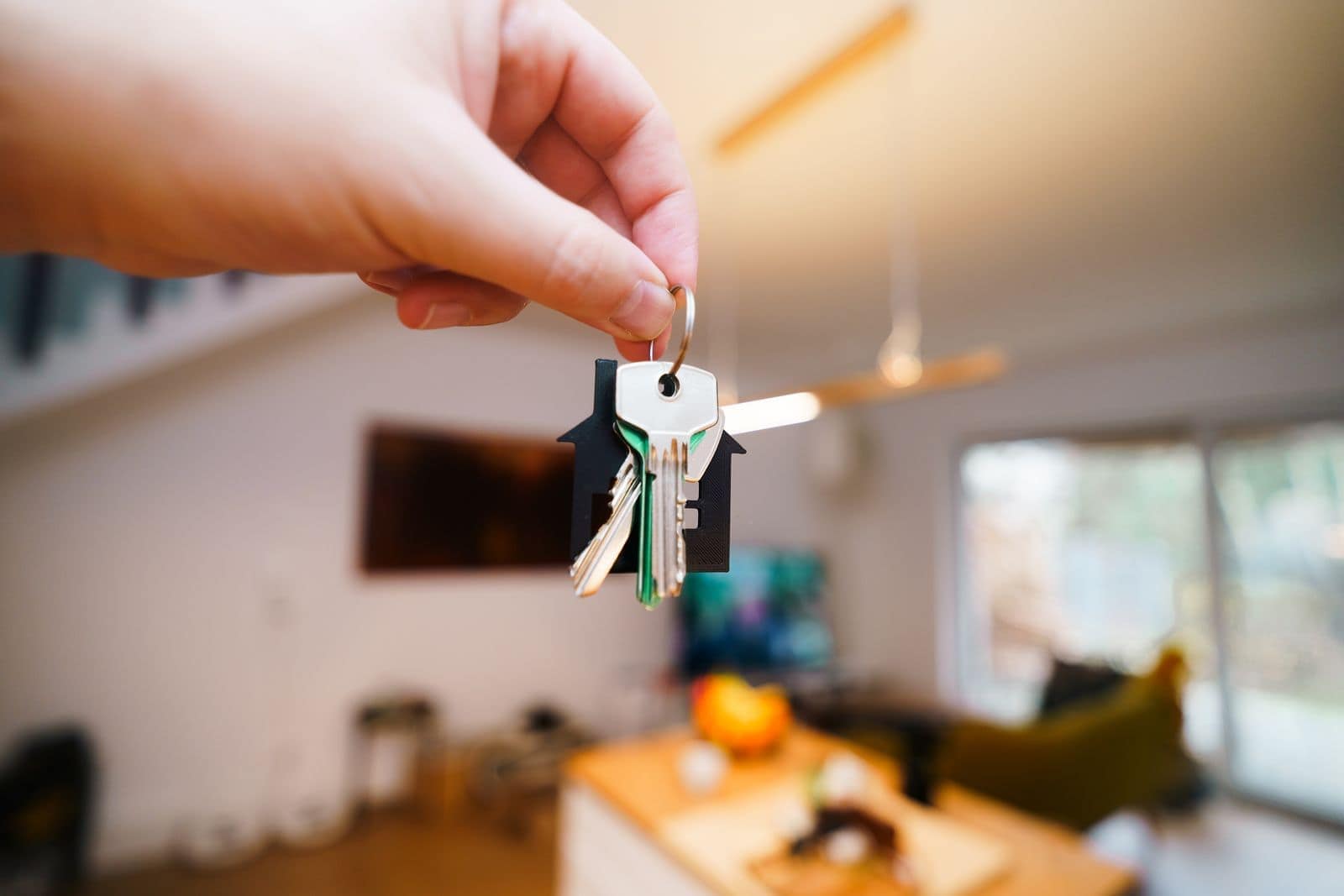
A hand holds up a set of house keys on a house-shaped keychain, with a warm, softly blurred living room behind.
Scored questions
150
Time limit
3 hours
Passing score
70%
Exam fee
$100

Your path to a California license

Start from wherever you are now. Each stage links to the page you need next.

  1. 1Not started yet

    What California requires

    Course hours, the exam, fees and fingerprints, in the order you'll do them.

    See the steps
  2. 2In or after your course

    Start here

    Take the free practice test

    25 questions from the national portion, with your score by topic.

    Start the CA test
  3. 3Studying

    California study guide

    The key points for California, on one printable page.

    Open the study guide
  4. 4Exam is coming up

    Get ready to pass

    Full California practice exams, a daily study plan and flashcards that come back on a schedule.

    See exam prep

How is the California real estate exam structured?

Each fact below links to the official source we took it from.
California exam at a glance
FactValue
Exam providerCalifornia Department of Real Estate
FormatOne combined exam, 150 scored questions
Time limit3 hours
Passing score70%
Exam fee$100
RetakesIf you fail, you can apply to retake the exam once your results arrive; the re-examination fee is $100. There is no limit on attempts during the two years after you file your original application, after which you must reapply and requalify.
ID to bringBring one valid photo ID: a current state-issued driver's license or DMV identification card, a U.S. or foreign passport, or a U.S. military ID. Without one you will not be admitted.
SchedulingBook online with the providerSchedule your exam
Source: Candidate handbook, unless a row names another. Updated November 2026.

The California exam, to scale

One combined exam
150questions
Pass: 70%
150 scored questions · 3 hours in total

What's on the California real estate exam?

One exam covers both the general principles every state tests and California license law and practice. Shares are from the official exam content outline.
  • Property ownership and land use

    Estates and interests in land, real versus personal property, and how governments and private parties limit land use.

    15%
  • Contracts

    What makes a contract valid and enforceable, the contracts used in a sale, and what happens when one is breached.

    12%
  • Agency

    How agency relationships are created and ended, the fiduciary duties an agent owes, and the different types of agency.

    17%
  • Financing

    Mortgages and loan types, the clauses in a loan, how lenders qualify buyers, and the federal rules that govern lending.

    9%
  • Valuation and appraisal

    The three approaches to value, what affects a property's value, and how an appraisal differs from a market analysis.

    14%
  • Transfer of title

    Deeds and what makes them valid, title insurance, recording, and the ways ownership passes voluntarily and involuntarily.

    8%
  • Property management and leasing

    Lease types, landlord and tenant rights and duties, evictions, and the role of a property manager.

    Not listed separately
  • Fair housing and federal law

    The federal Fair Housing Act, protected classes, prohibited practices such as steering and blockbusting, and related federal laws.

    Not listed separately
  • Real estate math

    Commissions, prorations, loan-to-value, area, property tax and investment calculations, with the formulas behind them.

    Not listed separately
  • Practice of real estate

    Day-to-day duties of a licensee: handling client funds, advertising, record keeping and avoiding misrepresentation.

    25%
  • Disclosures

    What sellers and agents must disclose to buyers, including material defects and federally required disclosures.

    Not listed separately
  • California license law

    Your state's licensing requirements, commission rules and the conduct the commission can discipline.

    Not listed separately

California real estate exam sample questions

Here’s what the questions look like, with the answer and the reasoning behind it. When you’re ready, the free test gives you a score for each exam part.

Take the free CA test
  • California · State license lawWho appoints California's Real Estate Commissioner?

    B. The Governor

    Business and Professions Code § 10051 says the commissioner is appointed by the Governor. The commissioner is the chief officer of the Department of Real Estate (§ 10050). Licensees do not elect the commissioner, and the Attorney General has no appointing role.

    Based on: Bus. & Prof. Code § 10051 · Real Estate Law, Bus. & Prof. Code §§ 10050–10053 (DRE edition, in effect Jan. 1, 2026)

  • National · Property ownership and land useWhen courts decide whether an item has become a fixture, which group of factors do they generally weigh?

    A. How firmly it is attached, how it relates to the property's use, and the intent to make it permanent

    Courts look at the degree of attachment (annexation), how closely the item relates to the purpose of the property (adaptation), and any intention to create a fixture. Cost, insurance and MLS listings are not the tests; an inexpensive item that is built in can still be a fixture.

    Based on: Fixtures: annexation, adaptation and intention · Cornell LII Wex: Fixture

  • National · Transfer of titleWhich type of deed generally gives the buyer the highest level of protection, with the seller guaranteeing clear title?

    B. Warranty deed

    In a warranty deed the grantor guarantees clear title and assures the grantee the property is free of liens, encumbrances and claims, which gives the buyer the most protection. A quitclaim deed is the opposite: it makes no promise that title is good.

    Based on: Types of deeds: warranty deed · Cornell LII Wex: Warranty deed, Cornell LII Wex: Quitclaim deed

  • National · ContractsWhich of the following is one of the basic elements required for an agreement to be a legally enforceable contract?

    C. Consideration exchanged between the parties

    An enforceable contract needs mutual assent (offer and acceptance), consideration, capacity and a legal purpose. Recording, notarization and earnest money are common in real estate deals, but none of them is an element that makes a contract valid.

    Based on: Contract formation: essential elements · Cornell LII Wex: Contract

How do you get a real estate license in California?

Passing the exam is one step. Here's the rest of the process.
  1. Step 1

    Check that you qualify

    You must be at least 18, have a Social Security number or ITIN, and complete three college-level courses: Real Estate Principles, Real Estate Practice and one approved elective.
  2. Step 2

    Apply for the exam

    Apply through eLicensing or by mail with your course transcripts and the $100 exam fee. You can also file a combined exam and license application (RE 435) and pay both fees at once.
  3. Step 3

    Get fingerprinted

    Take the Live Scan Service Request (RE 237) to a live scan provider and pay the $49 processing fee plus the provider's service fee. You can do this after applying for the exam or after passing it.
  4. Step 4

    Schedule and take the exam

    Once the DRE approves your application, book a date in eLicensing and take the 150-question exam. You need 70% to pass.
  5. Step 5

    Apply for your license

    If you filed exam-only, download the Salesperson License Application (RE 202) from eLicensing after you pass and submit it with the $350 license fee and your Live Scan form.
See every step and cost

Prepare for the California exam in the study app

A daily study plan, practice sets that lean toward your mistakes, spaced flashcards and timed mock exams built like the California exam. One payment, no subscription.

Basic

The study app: questions, mock exams and flashcards for your state.

$39one-time

3 months access

  • A daily study plan, with a streak and a minutes goal
  • Smart practice sets from national & state questions
  • Mistakes that come back until you've fixed them
  • Full mock exams scored by part, with a readiness range
  • Flashcards on a spaced-review schedule
  • An exam-day checklist, counting down to your exam date
Get Basic · $39

One-time payment. No subscription. Plus sales tax where it applies.

Recommended

Pro

Everything in Basic, plus the interactive study guide and longer access.

$89one-time

6 months access

  • Everything in Basic
  • Interactive study guide with diagrams, calculators and section checks
  • Highlights, notes and “Quiz me on my highlights”
  • Every mistake links to the lesson that teaches it
  • Interactive vocabulary worksheet
  • 6 months to study
Get Pro · $89

One-time payment. No subscription. Plus sales tax where it applies.

California real estate exam FAQ

150 multiple-choice questions, each with four answer choices, in one combined exam. You have 3 hours.

You must answer at least 70% of the questions correctly. If you pass, you are not told your final score; if you fail, you get your score and your percentage correct in each subject area.

Two years from the date the DRE receives it. You can retake the exam as many times as you need in that period; after it, you must file a new application and fee and requalify.

No. California has no reciprocity with any other state, so every applicant must meet the education requirement and pass the California exam. Residency is not required.

Licenses are issued for a four-year period, and you should renew before the expiration date on your license. To renew, you must complete any required continuing education first.

California publishes its pass rates: for FY 2025/26 (July 2025 to June 2026), 53% passed overall. The exam has 150 scored questions and you need 70%. Candidates who practice regularly with exam-style questions tend to do better.

You have 3 hours in total.

The exam fee is $100.

California Department of Real Estate administers the exam for California.

If you fail, you can apply to retake the exam once your results arrive; the re-examination fee is $100. There is no limit on attempts during the two years after you file your original application, after which you must reapply and requalify.

Bring one valid photo ID: a current state-issued driver's license or DMV identification card, a U.S. or foreign passport, or a U.S. military ID. Without one you will not be admitted.

Calculators are on DRE's list of items not permitted in the exam room.

The electronic exam gives your result as soon as you finish, and DRE may mail more correspondence, normally within five business days. If you pass you aren't told your score; if you fail you get your score and results by subject area.

DRE schedules exams based on applications received. Qualified examinees can also self-schedule an open seat in eLicensing as late as 6:00 a.m. on the exam day.

Find out if you’d pass the California exam today

The free test has 25 questions and scores each exam part separately. You can start without an account.